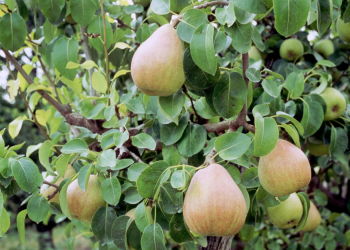
Poor Fruit Set and Flower Drop: How to Support Fruit Development
A solution to promote flower fertility and support pollinator activity
In modern horticultural and fruit-growing systems, final yield and size uniformity are largely determined during the fruit set phase, one of the most delicate physiological stages of the entire crop cycle. At this stage, suboptimal environmental conditions, physiological imbalances or inefficient pollination can lead to flower drop and early fruitlet abscission, a reduction in the number of fruits per plant and a loss of production uniformity. To address these needs, Cifo has developed B-ACTIVE™, a new biopromoter designed to positively support reproductive stages.
The Key Stages of Fruit Set: From Flower to Fruitlet
The reproductive process consists of three main steps:
Pollination: transfer of pollen from the anther of the stamen to the stigma of the pistil,
Pollen germination: development of the pollen tube, which grows through the style, creating the “pathway” to reach the ovary,
Fertilization: fusion of gametes, leading to the formation of the embryo and endosperm (seed components).
These physiological processes can lead to two different outcomes:
Fruit growth: the ovary develops into a fruitlet and initiates rapid cell division,
Early fruit drop: abscission of fruitlets after fruit set, often linked to incomplete or ineffective fertilization.
In practical terms, when pollination or fertilization does not proceed optimally, the plant may “select” and shed part of the fruitlets, with direct effects on yield and uniformity.
Factors Influencing Fruit Set (Internal and External)
For effective agronomic management of fruit set, it is useful to distinguish the main influencing factors:
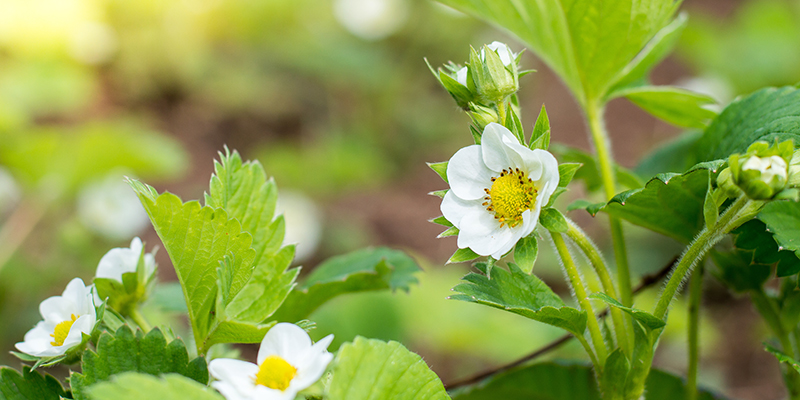
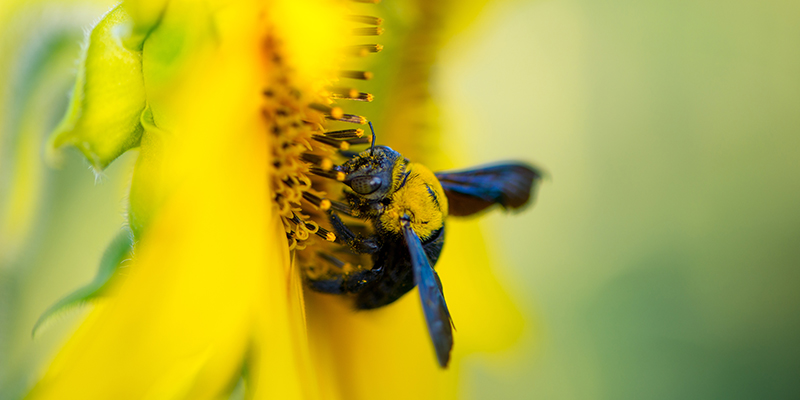
A) Pollination (internal / biological factor) Fertilization is essential for seed formation and for triggering fruit development. The availability and activity of pollinators (bees, bumblebees) directly affect the number of visits, pollen transfer and therefore the probability of fertilization.
B) Hormonal balance (internal / physiological factor) Fruit set is mainly regulated by auxins and gibberellins. A suboptimal hormonal balance can increase the risk of fruit drop and reduce fruit set stability. In the absence of pollination, ethylene tends to prevail, promoting ovule senescence and preventing fruit set.
C) Environmental conditions (external factor) Temperature, humidity, rainfall and wind can negatively affect both flower physiology and pollinator activity. In greenhouses, in particular, some factors become limiting:
Low temperatures: reduce flight activity and foraging behavior,
High temperatures: can decrease foraging intensity and flower attractiveness,
Excessive humidity: may impair flight ability due to wing wetting.
D) Plant nutrition (manageable external factor) Nutrients such as Ca, B, Zn and Mo play key roles in pollen germination, fertilization, cell division and the containment of early fruit drop. A nutritional strategy aligned with the reproductive phase is often decisive.
What Is B-ACTIVE™ and Why It Is Different
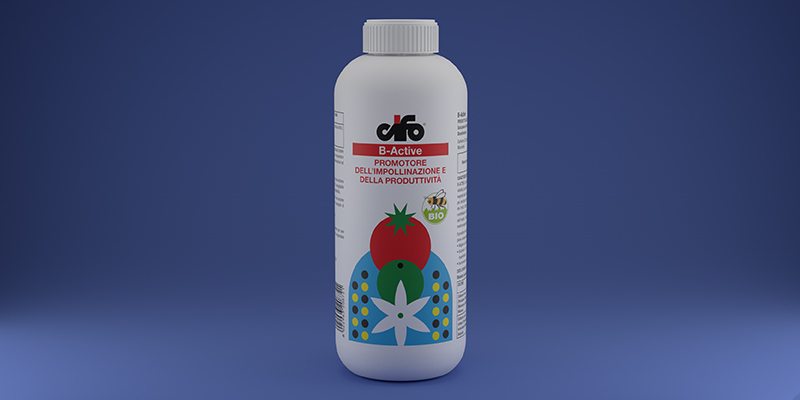
B-ACTIVE™ is Cifo’s new pollination and productivity promoter, developed to support flower physiology by improving:
flower vitality,
receptivity (ability to receive and manage pollination),
fertility (efficiency of reproductive processes).
It is approved for use in organic farming and is based on a multifunctional blend of plant‑derived organic matrices, combining:
selected carbohydrates and polysaccharides,
plant extracts providing tryptophan and proline.
This synergy integrates selected carbohydrates and auxin precursors to enhance pollinator activity and support fruit development.
How B-ACTIVE™ Works: Physiological Mechanisms and Agronomic Benefits
B-ACTIVE™ is designed to support the plant during the most delicate stages of flowering and fruit set, when environmental stress and physiological imbalances can reduce pollination efficiency and increase fruit drop. Its action translates into tangible benefits for flower vitality, interaction with pollinators and fruitlet stability.
1) More vital and functional flowers during flowering During flowering, plants face high energy demand. Temperature fluctuations, suboptimal humidity or physiological stress can weaken flowers and increase the risk of abscission. B-ACTIVE™ helps maintain flowers active and functional for longer thanks to plant-derived amino acids (tryptophan and proline), which support plant metabolic processes during flowering. This physiological support enables flowers to better cope with non-ideal conditions, reducing the tendency toward flower and early fruit drop. In practice: more resilient and receptive flowers have a higher probability of successfully completing the transition from flower to fruitlet
2) More efficient pollination through increased insect activity In many horticultural and fruit crops—especially under greenhouse conditions—pollination can be a production bottleneck: fewer insect visits mean fewer fertilizations and irregular fruit set. B-ACTIVE™ contains plant-derived carbohydrates and polysaccharides that:
provide nourishment to pollinators during flowering,
promote longer flower visitation and more effective foraging activity.
At the same time, the formulation supports the internal processes of the flower, accompanying the transition from flower to fruitlet in the immediate post-pollination phase.Agronomic note: B-ACTIVE™ acts only in the presence of active pollinators. Under unfavorable environmental conditions (severe cold, excessive heat, high humidity), it does not replace insect activity.
3) More stable fruit set and more uniform fruits After fruit set, particularly in tree crops, part of the fruitlets may undergo early drop when pollination or fertilization has not been sufficiently effective. B-ACTIVE™ helps stabilize fruit set by supporting the plant’s physiological balance during the early stages of fruit development. Proline and polysaccharides help protect growing tissues, promoting more regular fruitlet development even under environmental stress.Desired agronomic effect: more uniform fruit set, reduced fruitlet loss and improved size uniformity, with a positive impact on yield potential.
Key Agronomic Benefits of B-ACTIVE™
The use of B-ACTIVE™ helps to:
support flower vitality and functionality during the most sensitive stages, limiting drop,
promote fruitlet development by improving pollination efficiency,
achieve more uniform fruit set, with positive effects on fruit number and size homogeneity.
Target Crops and Application Guidelines
(Foliar application during flowering) B-ACTIVE™ is strategic for fruiting vegetable crops and fruit trees, both in greenhouse and open-field conditions. It is applied by foliar according to the following guidelines:
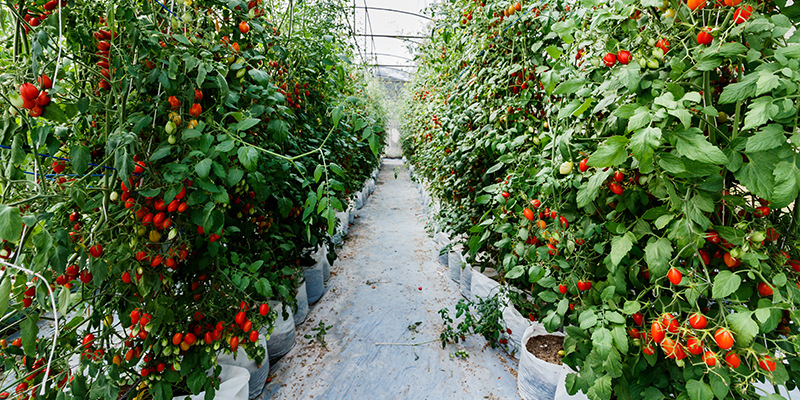
Greenhouse crops (tomato, pepper, eggplant, watermelon, melon): during the flowering phase of each truss.
Open-field crops (processing tomato, melon, watermelon): at first and second flowering.
Fruit crops (cherry, kiwi, pear, apple, peach, olive, etc.): 1 application when 40–50% of flowers are open, with the possibility of repeating after 4–7 days depending on flowering progression and environmental conditions.
Application guidelines are provided for general informational purposes only and may vary based on crop type, variety, environmental conditions, and local agronomic practices. Results may differ depending on factors outside of our control, including weather, soil conditions, and crop management.
Agronomic Tips to Maximize Effectiveness (Especially in Greenhouses)
To fully enhance the effectiveness of a pollination promoter, it is advisable to work in parallel on several contextual factors:
Microclimate management: avoid temperature and humidity extremes that reduce flight activity.
Pollinator presence and management: verify colony availability and dynamics, especially during critical periods.
Flowering uniformity: balanced nutrition and proper irrigation reduce phenological gaps between plants and trusses.
Application timing: applying during flowering at peak receptivity is often decisive.
B-ACTIVE™, a Solution to Prepare for Higher Productivity
When the goal is to improve fruit set quality and reduce losses related to environmental stress and pollination variability, B-ACTIVE™ represents a practical solution to:
support flower vitality at critical stages,
promote more effective flower–pollinator interaction,
guide the plant toward more stable fruit set with greater production uniformity.
FAQ
Is B-ACTIVE™ a fruit-setting agent? No. B-ACTIVE™ is a biopromoter designed to support flower physiology and promote processes related to pollination, fertilization and fruit set, contributing to fruitlet stability and uniform fruit number.
Which crops is B-ACTIVE™ used on? It is recommended for fruiting vegetables and fruit crops, in greenhouse or open-field conditions, with foliar application during flowering. It is particularly valuable when pollination efficiency directly affects yield and quality.
Does B-ACTIVE™ “attract” pollinators even if they are not flying? No. B-ACTIVE™ enhances pollination only in the presence of active insects. If environmental conditions make pollinators inactive (cold, excessive heat, high humidity), the product does not trigger flight activity.
Which components make B-ACTIVE™ effective during flowering? The formulation combines an organic matrix rich in carbohydrates and polysaccharides with plant extracts containing tryptophan and proline, which respectively support pollinator activity and help sustain the physiological processes of the flower and the flower‑to‑fruit transition.
Is B-ACTIVE™ approved for organic farming? Yes, B-ACTIVE™ is approved for use in organic agriculture. Please confirm accuracy of this statement: B-ACTIVE is approved for organic farming.
 22/12/2023